Thursday, April 23, 2009

Prologues in SF

This is actually an answer to the "A Bit Previous" post by Neil Williamson, which was triggered by a Twitter discussion after Gareth Lyn Powell made the seemingly innocuous remark "I can haz prologue".

The general sentiment, it seems, is against the (use of the) prologue. Here's my defense of it:


As I already mentioned on Twitter, prologues are like highly dominant spices in a dish: they can work if used with mastery and restraint, and if they add someting essential to the whole.

Three types (from the top of my head):

1) Essential pre-info dumping.

In this, a previous event that — like the famed ‘wings of the butterfly’ — sets off a much larger event. The much larger event is the novel, the much smaller event that initiated the storm is the prologue.

Example: Schild’s Ladder by Greg Egan. Part one of that book is nothing but a prologue; that is: the experiment that triggered a Universe-wide change of reality. The experiment in the prologue is about probing reality at its deepest core — like Fermilab and Cern are doing, but then on a much grander scale. This experiment focusses immense energies at a very small scale, and triggers a change of the ‘normal’ vacuum state, something the researcher in the prologue didn’t expect.

However, once a quantum of the vacuum turns into ‘novo-vacuum’, this releases enough energy to transform nearby vacua as well, and a chain reaction ensues: reality changing from state 1 to state 2 at about half the speed of light.

The researcher and her team don’t survive the experiment (are simply transformed/absorbed by the novo-vacuum), so can’t be used as a flashback/infodump latter on in the story.

The rest of the novel is about how the novo-vaccuum expands from the initial site of the experiment — a sphere expanding at half lightspeed — and how some people eventually find that — while it transforms ‘normal’ space, ‘eating up’ planets settled by humans — this might not be a bad thing after all, as they discover that the novo-vacuum might be *richer* than normal space. However, for deeper emotional richness and involvement it is essential that the reader knows that the onruishing novo-vacuum is not a freak event, but something initiated by scientific curiosity, giving the novel a richer moral ambiguity.

Schild’s Ladder is probably the most extreme hard SF novel ever written, and possibly the one’s that least understood. I consider it Egan’s absolute masterpiece, the most extreme extrapolation of hard SF to date.

And it wouldn’t have worked without the prologue (even if it’s called ‘part 1′: it stands completely apart from the rest of the novel, so is the perfect definition of a prologue).

2) Superb scene-setting without giving anything essential away (that almost the antidote of example 1).

This is even harder to do: the only example that comes to mind right now (and I’m almost certain that next week or next month, when this discussion is forgotten, several better ones will come up) is Ian McDonald’s Brasyl.

I know, Our Lady of Production Values is presented as a first chapter rather than a prologue, but its first three ’slices of Brazil’ — present, future and past — work phenomenally well as three separate prologues into the complex multiverse that is ‘Brasyl’.

(Warning: music analogy coming): It’s akin to the way that ‘Prelude to Madness’ — which is a very heavy version of the Grieg original — is used as an prelude (musical prologue) of Savatage’s “Hall of the Mountain King” (which is the original title — albeit in Norwegian — of Grieg’s composition. It sets the stage for the main song, the whole atmosphere while also, in a way, is quite different from it. It paves the way without giving too much away, and both the prelude and the main song are more than the sum of the separate parts.

3) Both an essential pre-info dump that does give something essential away *and* a superb scene-setting that doesn’t give everything away.

This one is the hardest to do.

For this, check out The Shadow of the Wind by Carlos Ruiz Zafón. This is probably one of the most perfect prologues ever written: the protagonist tells how — when he was still very young — he was taken into the ‘Cemetery of Forgotten Books’ by his father, and had to make a life-changing choice by selecting one book (which was, obviously, The Shadow of the Wind by Julián Carax). This foreshadows everything while giving almost nothing away. It makes you want to read this, no matter what. And the novel delivers in spades.

Maybe it’s more like an overture (warning: musical analogy coming up) than a prelude: it contains the seeds of everything to come while not telling the whole story. Like the ‘Overture’ of 2112 by Rush.

I know that anybody can give countless examples of prologues that are total failures, and I gladly concede that the utmost majority are.

However, that is the same as saying that 'stream-of-consciousness’ writing can never work. Indeed, it almost never does. However, you have novels like ‘Ulysses’ and ‘Finnegan’s Wake’ (the obvious English-language examples: there are Russian & French predecessors and many international and English-language successors to this style of writing).

In science, the single successful experiment leads to a new, breakthrough theory that eventually gets general acknowledgement (and acknowledges the necessity of the failed experiments, as well, as these showed how it shouldn’t be done). In SF writing though, it seems that more often than not people prefer to discard the rare but spectacularly successful experiments on the basis of all the failed ones.

That, I am arguing, is fatally wrong and will help make SF irrelevant.

Wednesday, April 8, 2009

EasterCon: LX 2009

I will be attending EasterCon in Bradford. I hope to see many of you there: both the ones I already know, and new people (happy to meet you!).

I will be on the following programme items:

Friday April 10:

SF music in popular culture : War of the Worlds to Rocky Horror
Fri 19:00 Hawthorn
Persephone Hazard (moderator)
Mike Cobley
Jetse de Vries
Neil Williamson

Sunday April 12:

"Near-future, optimistic SF": "Two impossibilities, or something we can pull off?"
Sun 19:00 Hawthorn
Jetse de Vries (moderator)
Chris Beckett
Jaine Fenn
Charlie Stross
Tony Ballantyne

"Writers, artists and fans discuss their musical inspiration"
Sun 20:00 Sycamore
Persephone Hazard (moderator)
Mike Cobley
Paul McAuley
Jetse de Vries
Alastair Reynolds

E-Books - are they the future? Ebook readers are being sold in high street stores. Has the timefinally come for them to achieve mainstream popularity?
Sun 22:00 Hawthorn
Alex Ingram (moderator)
Mike Scott
Lee Harris
Jetse de Vries

Monday April 13:

Hugo nominations panel: "The nominations for the 2009 Hugo awards have been released - what do we think? What are the surprises, and what are the notable omissions?"
Mon 11:00 Boardroom
Pauline Morgan (moderator)
Mike Scott
Penny Hill
Shana Worthen
Jetse de Vries

So my Sunday evening schedule is quite full, but luckily I will have time enough on Saturday to check out a few book launches (especially the Future Bristol anthology), the BSFA Awards, the Symphony Orchestra, the dealer's room, and other programme items.

There's even a beer tasting Saturday at 21.00!

Hope to see many of you this coming weekend!

Tuesday, March 24, 2009

Ada Lovelace Day: Ingrid Daubechies

In honour of Ada Lovelace Day, I thought that I'd try to highlight a woman in science from my home country, The Netherlands. To be honest, I couldn't think of one, and also couldn't find a high profile one. This may very well be because I don't know enough, or because I didn't search enough, and do please feel free to correct me, as I sincerely would like to know.

So I moved my focus to our southern neighbours, and found a great example of a high profile female scientist: Ingrid Daubechies.

Her accomplishments are staggering: while she's mainly known in the field for her Daubechies wavelets and CDF wavelet (Cohen-Daubechies-Feauveau wavelets, of which one family is famously used in the JPEG 2000 compression), she has a Ph. D. in theoretical physics, was the first female full professor of Mathematics at Princeton -- where, I suppose, she still works today -- and has won a veritable slew of awards:

As wikipedia notes:

In 2000 Daubechies became the first woman to receive the National Academy of
Sciences (NAS) Award in Mathematics, presented every 4 years for excellence in
published mathematical research. The award honored her "for fundamental
discoveries on wavelets and wavelet expansions and for her role in making
wavelets methods a practical basic tool of applied mathematics."

I must apologise for not researching this further: typically, I made the pledge and on the day itself I find myself extremely busy. I may extend this post tomorrow.

UPDATE: there's a saying in Holland that goes: 'It's as if the Devil's playing with it'. Anyway, in a clash of synchronicity -- see me mentioning above that I couldn't come up with clear examples of Dutch women strong in science or technology -- Dutch newspaper De Volkskrant has an article about Suzan de Haan, who is the only female operations manager in charge of a drilling platform in the Dutch part of the North Sea offshore industry.

Article here (in Dutch). I'll translate some parts tomorrow as I'm running out of time today. But hey: I'm proud of Suzan de Haan, as this is a part of technology in which my day job is also closely related (we provide propulsion installations for such platforms), so I know how difficult her job is. Hat's off!

Carousel Gig in the Willem 2

Sunday March 15 the so-called Blisstrain tour had their final gig in de Willem 2 in Den Bosch.

Line up: The Antikaroshi, Ostinato, Bulbul, Beehover and We Insist!. The whole show consisted of the bands playing in a kind of 'carousel': one band would start to play, members of other bands would join in at some points, and near the end of their playing time members of the next band would join in until they took over, and the next band was on. And so on throughout the gig.

Thus, the band I was most interested in seeing -- The Antikaroshi -- started the 'Blisstrain'. Actually, the guitar player/singer of Beehover was joining in as an extra vocalist, sitting on his knees, shouting through a megaphone. May sound strange, but it worked.


After that first song, it was mostly 'pure' Antikaroshi (the violin player of Bulbul joined them during one song, and a guitar player from another band during another: I'm not sure which one): a very good band, and they played most of Crushed Neocons, with verve. Since I wasn't very familiar with them (I bought Crushed Neocons at the gig, and had only listened to some of their songs on their MySpace page), I had some cognitive dissonance. For example, at the gig I heared the one singe line of "Fes" as:

"There are so many drugs around. I need them bad, bad, bad."

While on closer listening at home it's obviously:

"There are so many dogs around. I hear them bark, bark, bark."


I leave further conclusions to the Freudians amongst you. When the drummer of two-piece band Beehover joined in, the end of the Antikaroshi's set was near. I really like them: Fugazi is an obvious influence, although for my money the Antikaroshi are more freestyle, while at the same time more tight. Great musicians.

Beehover was a nice surprise: they're a two piece (and read why on their biography) band, very tight and with a highly distinct sound. The guitar player -- as far as I could see -- uses a five string bass, of which he has stringed only the bottom four strings. The result is a sound that hangs somewhere between bass and guitar: sometimes you hear Lemmy, sometimes Kyuss, sometimes dirty rock'n'roll, sometimes stoner rock.

My friend Vincent and I loved them, and I bought their latest album Heavy Zoo after the gig. Then, instead of the next band, there was an unexpected break -- it must have been unexpected, because the DJ Bidi, who was talking backstage, had to run to get the music started.


Check out pictures of the show, made by the venue's volunteers, here.

After the break Bulbul and Ostinato played, but neither made much of an impression on me. This is mostly a matter of taste: both bands are fine, they're just not for me.

The evening ended with the highly alternative French rockers of We Insist! A weird band whose music was all over the place. The drummer looked like a cross between Phil Lynott and John Holmes, and especially his leopard skin shirt was beyond kitsch.

Maybe by that time I had too much, or my mood had shifted, but I found them a bit too freaky. YMMV, as always.

Apart from the usual merchandise (T-shirts, CDs, etc), Blisstrain provided a USB-stick with footage from the show, recorded that very day. I bought it, and love the idea!

This is the way small venues like Willem 2 and small labels like Exile on Mainstream Records make a difference: memory sticks with footage of the show you just visited, pictures both by volunteers and by visitors (if they supply them) of the same gig after that show: see above): a use of new media to good effect. Much fresher than the old go to the gig, no photos allowed and buy the overpriced merchandise tours of much bigger bands.

That Sunday I spent half the money (than I would have on a show of a 'bigger' band) and got more than twice the fun.

Saturday, January 10, 2009

Why Postal Companies Are Going Down the Drain

Warning: rant!

Today I sent off an MS of 60 pages to the USA. Since that weighed over 200 grams, I had to pay 10.45 euros for the privilege. The economy option for post outside the EU has been discarded: it's either the priority rate or nothing. This is insane: I will now endeavor to send MSs only through email (even more than I already did).

Then I wanted to send a small envelope of business mail to the UK. Not only has the economy option for that been dropped, as well, but you must buy a minimum of 5 stamps, as of January 1. I only need one stamp, not five. Also, years ago postage rates would remain the same for years on end. Now the rates are increased every year, so those other four stamps will be useless if I don't use them before the end of the year.

The lady at the post office had already put the 5-stamp package in front of me, expecting I would accept that kind of policy without question. This sort of monopolist shenanigans makes my blood boil, and in turn my stubbornness goes to 11 (on a scale of 10).

So fuck that: I've sent it off with two old stamps I still had who together were worth more than the priority rate. On top of that, I'll scan the signed contract at the day job next Monday, and email it. I will try my damnedest to do as much of my correspondence over email (if possible *all* correspondence).

Thus, large national postal companies (I understand that the Royal Mail and USPS are just as bad) will continue to lose small customers (yes: citizens like you and me) through their insiduous ways of charging outrageously, and will end up mostly servicing large customers that send of mail in bulk, and thus get good discounts.

However, there are already many private companies doing that, and since these offer cut-throat rates (for bulk shipments only: just try to send a single package through a private mail company, and watch the price) in combination with horrible service (and I've seen quite some rants aimed at UPS, DHL and FedEx in the blogosphere), that is the way the national mail companies will go.

And indeed, Dutch TNT Post (already partly privatised) has already announced job cuts for the upcoming five years, even if they continue to make a profit. You see, they have to *continue* to make a profit, as they're not a fully national comany anymore. So they increasingly focus on the commercial market, and keep increasing the prices for small customers.

SF magazines are one of those 'small' customers: sending out a few thousand (let alone a few hundred) is not enough to get a bulk discount. So the postal rates for them go up, considerably, as well. Therefore, SF fiction print magazines are doomed (or more doomed than they already were): mailing costs will go up, and sending the magazines through commercial companies is even more expensive. In the abscence of growing subscription numbers, the only thing left (apart from going fully online) is cutting costs. Therefore Asimov's and Analog have changed size, and F&SF has lowered its publishing frequency. However, if USPS keeps raising its prices -- and they will -- it's a losing battle (and it pains me to say so).

And the national postal companies will become indistinguishable from commercial shippers, with the only difference that they must deliver mail to even the smallest of customers. By boy, will they charge you for it!


Saturday, December 20, 2008

Some Cheese, Wine & Beer Blogging

For the few people still hanging on: apologies for the relative silence. Of late, most of my blogging energies went into the Shine anthology weblog. Expect some major announcements and fresh developments on that soon.

Also, it was very busy at the day job: I was having nothing but back-to-back training sessions from the Summer onwards, with barely a day or two to recover in between.

OK: let's start with some wine. From my employer I got two bottles of Grande Visière. I tried it last Thursday, and didn't like it. I tried it again on Friday, and it still didn't work. I tried it the last time today: I guess it's OK as table wines go, but it just doesn't have any character: a middle-of-the-road red that is just a little bit too sour and too plain unremarkable to make any kind of impression. A 3 on a scale of 10, or a 1.5/5 as Wineass has it.
Since I'm at it, a Wineass-like Twitter review: Grande Visière French table wine: sour, dull. Like transmission fluid without lubricating properties. Free, 1.5/5, use only in emergency.
I actually threw it down the drain after tasting the Lehman: with wine I just can't be bothered with second class products (nothing to do with price: some cheap wines can be very good).

Then in the local Gall & Gall liquor store (where a very good friend of mine works) I bought a Spanish wine called Celeste (a 2005 crianza from Ribera del Duero), which I haven't opened yet (so expect a report later on), and a Peter Lehman the futures shiraz from 2003, which I opened.

According to Sylvia (my good friend at the Gall & Gall store) 2003 was one of Australia's best wine years, and it shows: I think it's divine. This is shiraz as it is meant to be (at least, according to my preferences): a red so deep it's almost black, rich forest fruits and plummy overtones, heavenly herbs and superb spices, subtle, fine grained tannins and a lingering, deep & complex aftertaste, like angels bleeding on your tongue.
Twitter review: 2003 Lehman the futures shiraz: fair dinkum. Forest fruits, plums, heavenly herbs & Superb spices. Angels bleeding on your tongue: €15, 5/5.


The cheese: I did some cheese shopping at Fons van den Hout, a delicatessen shop specialised in cheese in Tilburg. It's the closest shop (it involves a 20 minute train ride) where I can get the single Dutch truffle cheese: more than worth the short trip. I bought two cheeses there, and two from my local AH (Albert Hein) supermarket.

Also, I have the habit to put those -- sometimes expensive -- cheeses on LU (this is the brand name) crackers of the 'salt & pepper' variety: I find they combine real well with certain cheeses. Obviously, YMMV.
  • A gorgonzola piccante from Ballarini (from my AH supermarket);
  • A blue stilton which is the Christmas special in Albert Hein: you're supposed to drink port with it, but I have tried port several times (I have colleagues in Portugal who bring port, and I've tried it both in Portugal and Andalucía, but it just doesn't work for me. A matter of taste);
  • A mountain cheese from the Elzas (from Fons van den Hout);
  • A Dutch truffle cheese (ditto);
The blue stilton is both extremely crumbly and very smelly, and so blue-veined that mushrooms almost start to form: it's an aggressive cheese that takes no prisoners. Still, there is a certain complexity behind the near-overwhelming fungal and almost sickeningly sour attack on your taste buds. Definitely one for advanced cheese aficionados, and not one for the faint of heart. Strangely, I find it combines surprisingly well with Leffe Brune (see below).

The Elzas mountain cheese, on the other hand, doesn't make much of an impression on a first look: a plain cheese, halfway between soft and crumbly, with no fungal veins or speckled additives. Only the brown crust marks it somewhat. I tasted a piece of it in the shop, and it didn't immediately make much of an impression: this might also be due to the fact that it was very busy in the shop (good for them: they deserve the clientele) and that I was still slightly hung over from the office party of the night before.
However, after returning home and a refreshing shower it slowly reveals its hidden subtleties: a salt'n'mustard tang that works great with the almost sandy texture, combining the suaveness of a younger cheese with the character of an older one. Definitely a keeper, and a perfect accompaniment to the Lehman futures shiraz.

The gorgonzola piccante is an old favourite: when I do a four-cheese plate, I try to make a 50/50 mix of new and known. I tried the mild gorgonzola, but found that it was a bit too cowardly for my tastes. The piccante combines a certain tang with a certain smoothness, a bit like a very charming kid doing something naughty but getting away with it.


The Dutch truffle cheese (picture above): this one is the most difficult to describe for me. It combines the taste and texture of a 'belegen' cheese (in Holland this is a classification system to determine the amount of time a cheese has ripened: 'jong' -- young -- is up to four weeks; 'jong belegen' is 8 to 10 weeks; 'belegen' is 16 to 18 weeks; 'extra belegen' is 6 to 8 months; 'oud' -- old -- is 10 to 12 months; and 'overjarig' -- overaged -- is 16 months and older) with the phenomenal taste of truffles. How does a truffle taste? Well, this is a minefield: not only are there several types of truffles (black and white, summer and winter, and many others), and I suspect that this Dutch cheese uses the black truffle (the least expensive variety). Also, truffles are very pungent, so can easily dominate the palette.
However, when used in just the right amount they give extra depth, complexity and a certain suave smoothness to a dish (this can be a meat dish, over a pasta or a salad, or indeed in specialty cheeses). Think of the king of all mushrooms with a very earthy undertone and tangy, twangy, maybe even funky overtone (OK: it is undescribable. Do try it, if you get the chance). Restraint is the true mastery in combining cheese with truffles: too much truffles and they totally dominate the palette (if you want that, you might as well eat them pure, even if that's an expensive experience), too little and their complex suavity doesn't shine through.

Also, the very helpful lady in the shop in Tilburg gave me something extra: a dip (or sauce) to use with the cheeses: this is an orange marmalade-like concoction that I find works nice with more plain cheeses, but kills the complexity of the more advanced cheeses. So I'm only using it when in dire need (read: if I can't afford the real good stuff).

Now, I'm one of these drink multitaskers who think it's no problem to drink both a great beer *and* a fine wine during dinner. In some connoiseur circles this amounts to blasphemy, but since it's perfectly fine to have a seven (or more) course meal with a great diversity of dishes I don't see why I can't have the same diversity with drinks (and yeah, I know there are endless varieties of wine: I just like to have both beer and wine).

In summertime, I prefer wheat beers like Hoegaarden, Brugs Wit, Dentergems or a good German Heffe-Weissen. In wintertime, though, I prefer more heavy beers (apart from the Hertog Jan lager I drink year-round) like Leffe Brune and Corsendonk.

Leffe Brune
is the beer of choice tonight: a great complex darkly malted beer with caramel overtones: packs a good punch without knocking you out straightaway (in the manner a lot of triples do).

I also bought a Leffe beer glass: I think this is close to the perfect beer glass, an near-spherical bowl on a thick pedestal, think a wine glass for beer.

Sunday, November 30, 2008

The Police in Belgium

Don't mess with them...


Wednesday, November 19, 2008

I Have Been Interviewed...

...about optimistic SF and the upcoming SHINE anthology by Jay Tomio of BookSpot Central for their BookSpot Beat feature.

Sunday, November 16, 2008

The Diamond Ring Society

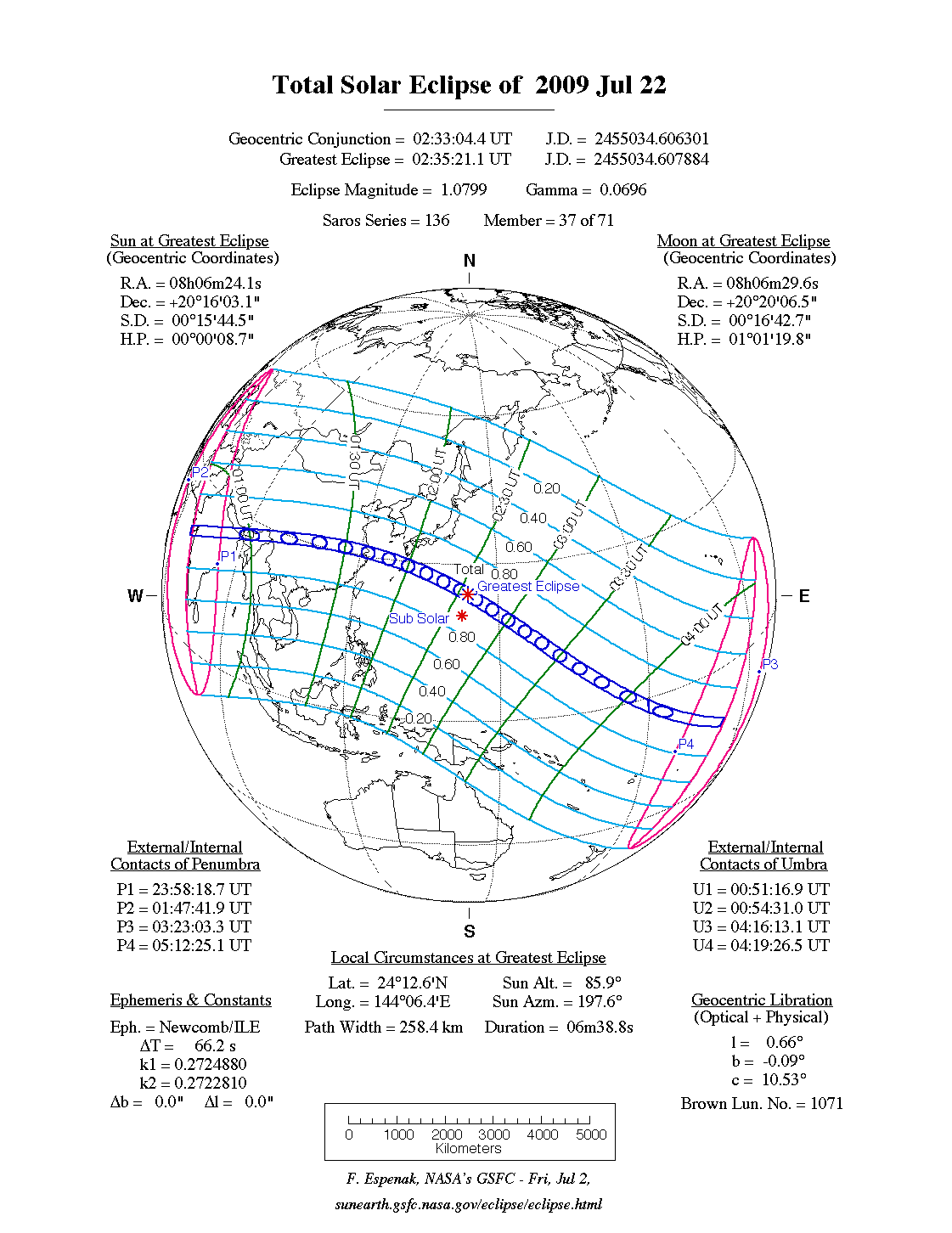
On Saturday November 15 there was another meeting of the 'Diamond Ring Society'. It's a not-so-secret cabal of Dutch solar eclipse chasers, consisting of my friends Peter v/d Linde, Bram LaPort, Ellen Dautzenberg and Freek Slangen. We met up in a bar in Amsterdam, exchanged pictures (that is: most of them gave CD-roms with pictures to me, as I'm not a photographer), and we discussed future solar eclipses.

First, finally some pictures of the August 1, 2008 total solar eclipse near Novosibirsk:

The shadow of the moon racing towards us over the lake;

The sky at the beginning of totality;

Snapshots of the total solar eclipse sequence:


First Contact until Second Contact;


Second Contact to Third Contact (totality with one protuberance and the solar wind);


Third contact to Fourth Contact;

The sky at the end of totality;

The shadow of the moon racing away from us across the lake;

(All pictures are made by Freek Slangen, a member of our not-so-secret cabal.)

The next total solar eclipse is July 22, 2009, where the moon's shadow will cross over the north of India, over the Himalaya Mountains into China, then into the Pacific via Shanghai, passing just under Japan and off way into the Pacific (path here). My friends are looking at an organised travel arrangement via the University of Utrecht: for me this might be a bit too long (a three-week trip), as I intend to do WorldCon in Montreal (August 6 to 10), as well, and also World Fantasy in San José, and I only have so much days off.

So I might fly into Shanghai for a week, and join my friends in Wuhan (which looks to be one of the best spots: it'll be a tricky one, as July is the monsoon season in India, and the rainy season in China. This is compounded with the possibility of tyfoons, which generate an enormous amounts of clouds around their central twisters). Then get back home, stay home for over a week -- instead of a day like this year when I went from Novosibirsk, one day at home, then onwards to Denver -- and go to Montreal.

In 2010, there is a total solar eclipse on July 11, which is almost fully over the Pacific Ocean, and ends in Patagonia. It crosses over Easter Island, but all accomodation and trips for that are already fully booked now. So we're looking at French Polynesia or the Cook Islands.

Saturday, November 15, 2008

Relevant SF

(Cross-posted from the SHINE blog)

...or: The world is looking for solutions. Why isn't SF trying to help, or at least trying to think along?

In the past couple of weeks, I've been in airplanes quite a bit. My airplane reading is mostly newspapers and science magazines like New Scientist and Scientific American. So when I flew to Spain about a month ago I delved into the October, 11th New Scientist "A Brighter Future" special issue, and when I flew to Calgary two weeks later I bought Scientific American's "Earth 3.0" special issue. Then there's also Ode Magazine (I read the Dutch version, but there's also an English one) with a 'Generation Now' special report.

The similarities between the three: they're all worried about the (near) future. Indeed, just like SF, I hear you think. But unlike most SF today, these three magazines are not only analysing the problems, they're also actively looking for solutions. Why has most SF fixated on the former (often directly extrapolating today's problems in tomorrow's dystopias), while greatly ignoring the latter?

I strongly suspect that this is one of the main factors that keeps (written) SF from being relevant to a larger part of the population, especially young people. Not the sole one(*), mind you, but a very important one. I strongly think we need SF that starts thinking about near future solutions for our current problems.

Since our problems are complicated and interlinked, our solutions need to be multifacetted: most of today's biggest adversities do not exist in isolation, so multiple causes need to be addressed simultaneously. This requires multidisciplinary approach that is both broad and deep: one single specialist in one field (no matter how brilliant) will not do, but a group of 'intelligent optimists'. These teamworkers and teambuilders realise that there is no 'one-size-fits-all' solution, but that quintessentially different aspects require tailor-made solutions. They cherry-pick the best solutions from a great variety of sources, attack the problems from a lot of different angles, and are interdisciplinary, practical, forward-thinking go-getters.

Dog help me, I hear some of you think: this is immensely difficult. Indeed, it is. It's the point: SF can't afford to be too simple or straightforward anymore. Good near future SF not only reflects the complexity of the real world to a high degree, it also needs to see the intricate problems as tractable if we put our combined minds to it, with sharp intelligence, the will to co-operate, and hope.

So let's look at this in a broad perspective, and link the three 'special issues' I mentioned above:

  1. Our energy and water problems are interlinked: both crises must be solved together (this is the Scientific American "Earth 3.0" cover blurb almost ad verbatim). In the article, they link water usage to huge power plants such as combined gas/steam cycle, coal, oil and nuclear plants. And if alternative vehicles like hydrogen fuel-cells and plug-in electric vehicles get their charge from these huge power plants than they are water hoggers, as well:
  2. But the New Scientist "A Brighter Future" has this highly illuminating graph on pages 32 and 33 that depicts where alternative energies such as solar, wind, geothermal, biomass and tidal wave are most abundant across the world showing that the electricity potentially available from renewables (310,600 TWh) is much bigger than the total electricity being generated (19,014 TWh in 2006). Especially solar and wind energy use hardly any water: so if we power our electric or hydrogen fuel-cell or biomass hybrids with them we kill two birds with one stone: the energy and the water dependency. Only 433 TWh is generated by renewables, so the potential is enormous:
  3. Which bring us to Ode Magazine's "Generation Now": it sees higher oil prices as the trigger for decentralised generation of renewable power, both stimulated by governments (as has already happened in Germany and Spain) and by entrepreneurs, as Silicon Valley investors are now turning to investing heavily in green energy, and where people will try to make their houses self-supporting energy-wise ('energy-free living');

Again, why do I find this kind of positive, forward-thinking in non-SF magazines?

Two quick, off-the-cuff musings:

  • We need an urgent paradigmatic shift in economic thinking: the planet cannot sustain continuous economic and population growth. So combine a zero-growth (or a shrink-and-expand-to-the-same-size) economy while the population stops growing, as well (UPDATE: the 'zero-growth' economy was actually the theme of the 18th October issue of New Scientist, as Anthony G. Williams's post 'The Folly of Growth' reminded me. Thanks!). The European Union might be the forerunner in this: less economic growth over the last decade than the US or the new Asian tigers China and India, with a population that is stagnating or even shrinking while its people are growing older.
  • Suppose a platform like Liftport starts building a space elevator somewehere west of the Galapagos Islands, it could have the hydrocarbons it needs for its complex nanotube tether supplied by a company that is cleaning the Pacific from the accumulated plastic pollution. It uses solar and skysails powered vessels to get supplies to and from the space elevator's Earth base, it's presence in the tropics stimulates the nearby Latin American economies in a sustainable way, and more.

This is to get you -- and especially the SF writers among you -- thinking. Doesn't SF pride itself for it's potential for 'sense of wonder' and its ability to shift paradigms? The point is, these sensawunda-powered conceptual breakthroughs almost always happened in space, virtual realities and runaway technological singularities (and yes: I'm guilty, too). Bring the gosh-wow, preconception-shattering power of SF to address, if even partly, the current problems plaguing our planet (or help imagine new solutions, new approaches) and SF will become relevant again.

Another maxim has it that SF writers like a challenge. So what are you waiting for?

(*) = I fully agree with Paolo Bacigalupi -- see his interview in The Fix and an exchange I had with him on his blog -- and Ian McDonald that SF needs to become relevant again (we disagree, and probaly not even that much, on how to recapture that relevance: Paolo's focus is on environmental issues, while Ian has a thing with the Multiverse, while I think we should troubleshoot the lot -- the environment, the economy, the human tendency to short-term thinking, the lack of education, and the elephant in the room called overpopulation): spewing humanity all over the galaxy while we haven't decently solved our current, highly complex problems is a flight forward. We need to face our challenges now, and instead of fictionally wallowing in them, we need to start thinking our way out of them.

(NOTE: I love a good discussion, and haven't closed the comments on this post, but I would appreciate it if people would comment on the SHINE blog.)